

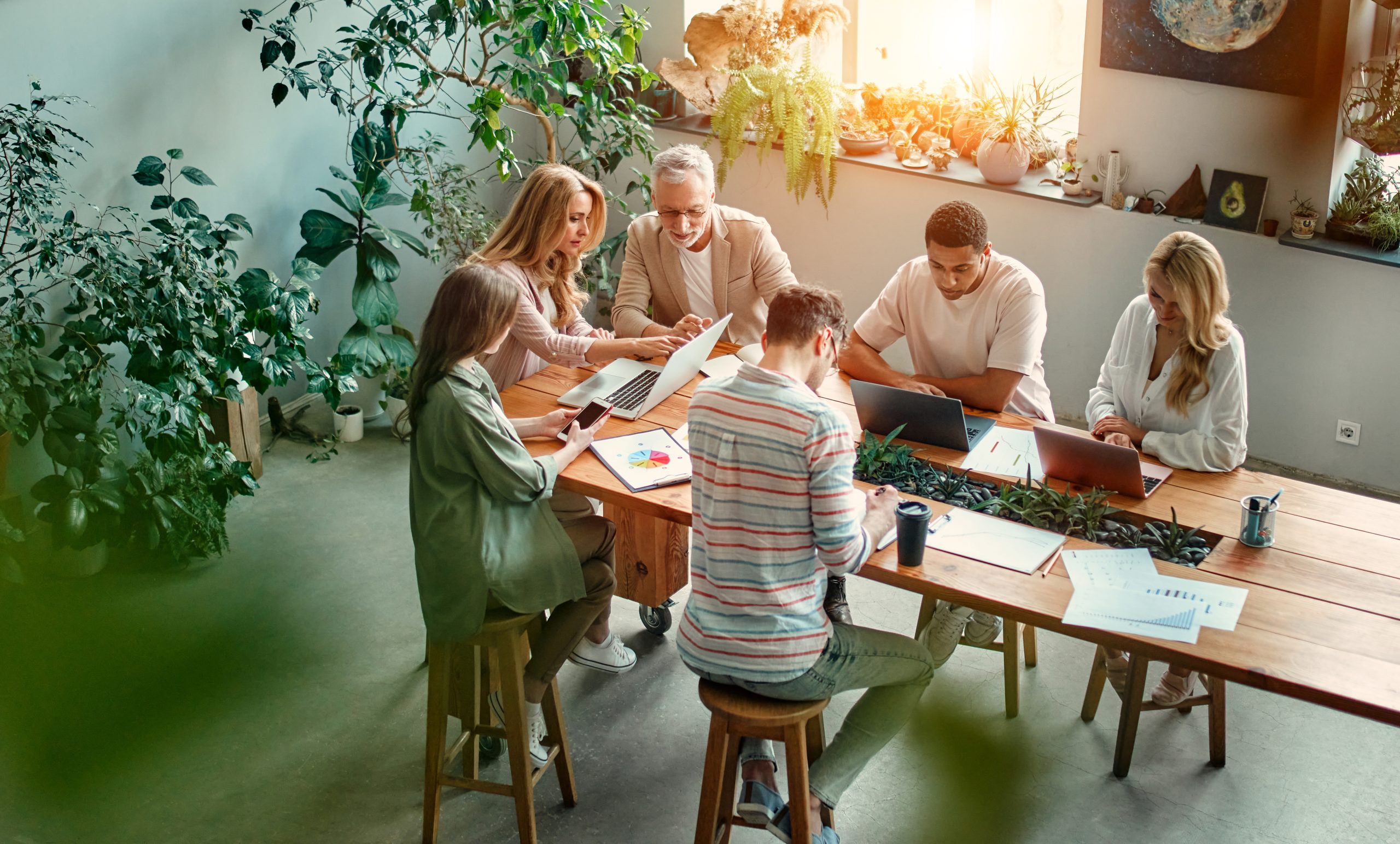
Over the past few years, following the experience of the pandemic, companies have been operating in constant testing mode. They have tested different work models and analyzed their impact on productivity, team engagement and business agility. Based on these observations, they are now coming to similar conclusions: the regular presence of employees in the office brings benefits that a remote formula cannot fully replace.
These changes in attitudes toward work organization are having an impact on the office real estate market. With more stationary days, the importance of how space is designed, how it functions and how it fits the needs of teams is growing.
Growing popularity of “return to office” trend
Hays Poland’s “Salary Report 2025” shows that 42 percent of employers prefer a model based primarily on in-office work, with one day of remote work. A global survey of CEOs of major companies shows that most of them expect a significant increase in the number of work days spent in the office over the next three years. In Poland, this trend is already evident in the steadily declining availability of employment opportunities with full remote work. However, the challenge remains that employees have grown accustomed to the convenience associated with it. Therefore, companies are looking for solutions to reconcile these expectations with the demands of the business. Most often, this means a structured hybrid model in which office presence supports collaboration and communication, while leaving a certain amount of freedom.
Why companies are increasing the number of days of stationary work
The expectation of a more frequent presence of employees in the office is primarily driven by the need for better coordination of teams. In many organizations, direct contact speeds up the flow of information, facilitates decision-making and promotes faster resolution of problems.
Specialists also stress the importance of the office in terms of organizational culture. Online meetings work well for day-to-day tasks, but it’s harder to build relationships and a sense of belonging this way. Which is especially important in the case of project teams, businesses that are growing rapidly, and companies that hire new people and want to effectively bring them on board.
For many employers, then, the return to the office is not a return to old patterns, but an attempt to regain those elements of teamwork that proved more difficult to achieve in a completely remote model. This is especially true for innovation, spontaneous knowledge sharing and ongoing collaboration between departments.
Will remote work end?
Although more and more companies are choosing to return to the office, this does not mean a massive retreat from hybrid working. On the contrary, such a model represents the most rational and most frequently chosen solution, which combines the need for flexibility with the possibility of regular presence of the team in the office.
Organizations approach this subject in different ways. Some set common office days for individual teams or departments. Others, on the other hand, set a minimum number of required days, leaving employees to choose specific dates for office visits. The common denominator is a move away from complete freedom to specific arrangements: two, three and sometimes four stationary days per week are becoming the norm.
The hybrid work model is seen as a compromise between the interests of companies and the expectations of employees. Companies want to see teams in the office more often, but at the same time they know that a complete shift away from flexibility could negatively affect their attractiveness as an employer and make it more difficult to attract talent.
Office as a tool to foster collaboration and organizational culture
The growing number of companies increasing their fixed work requirements is translating into a revival of activity in the office leasing market. Tenants who have been holding back decisions or reducing occupied space over the past few years are returning to negotiations with building owners – often with a changed approach to what they are looking for.
Priorities are changing when choosing an office, and companies are evaluating space in terms of its ability to attract employees and support workflow. A well-connected location, high technical standard of the building, availability of amenities and compliance with ESG requirements are becoming criteria as important as the financial terms of the lease.
There is also growing interest in Class A space in central locations. Companies that want to encourage staff to come to the office on a regular basis know that they should invest in space that justifies that arrival, and ideally motivates them.
– We are seeing a clear increase in awareness among tenants. Today, the office is no longer just a line item on the cost sheet, but an essential part of the strategy for building engagement. As a consequence of these changes, companies are increasingly choosing to relocate to higher-standard buildings or to deeply upgrade their current spaces to give them the functions that employees lack at home. At the same time, organizations today expect solutions that allow them to respond quickly to changing business needs and work patterns. Therefore, the key to success in 2026 is flexibility: both in the design of interiors and in the construction of leases themselves – comments Karol Grejbus, Director, Office Agency, Tenant Representation, Savills.
What office for returns?
The office must not be treated solely as a space where duties are performed. This is particularly important in the context of people who have been doing their work fully remotely for the past few years and during that time have become accustomed to an environment tailored to their needs. For them, returning to the office may be more difficult.
Therefore, office space should to some extent replicate the flexibility and comfort known from working from home. This means the need to create offices that offer a variety of zones – both for work that requires concentration and for team collaboration. Elements that affect daily comfort are also important, such as access to daylight, ergonomic workstations and areas conducive to informal meetings.
So for companies planning to change offices or renegotiate lease terms, in the context of increasing the number of days of stationary work, the key question is not just “how much” space they need, but more importantly “what kind of” space. A space that accommodates employees’ new habits and gives them more freedom to choose how they work is more likely to become an office they want to return to.
It is at this stage that the role of the consultant representing the tenant becomes invaluable. It is not just a matter of finding adequate square footage, but also of negotiating such conditions and technical parameters of the building that will enable the organization to adapt smoothly to the changes taking place without incurring excessive financial risk. This is important because experts expect the trend of returning to stationary work to strengthen in the coming months. Organizations will continue to test different options, but the main direction is clear: the office is returning to the role of the main work environment.
However, the phenomenon of returning to the office in 2026 is not a retreat into the past; rather, it represents a step toward a new quality of work. For business leaders, this is the perfect time to review their real estate strategy. If you’re wondering how to adapt your office to current market requirements, or you’re facing difficult lease negotiations – we invite you to contact us. Together, we will find a solution that combines the needs of your business with the expectations of your employees.